

Top 10 Tips For Assessing Qualified Technicians In PAT in East Midlands
Competence of the person performing Portable Appliance Testing is the key factor in transforming a mechanical procedure into a legally enforceable system. The Electricity at Work Regulations (1989) of the UK don't require a licensing scheme, or a certificate for testers of PAT. Regulation 16 states that all workers have "technical abilities or knowledge" necessary to prevent the risk of injury or danger. The duty holder, or the employer, who has to choose and appoint technicians. They must have an amalgamation of formal education and experience in the field as well as sound judgement. Because there is no mandatory certification, the market offers various levels of competence. This is why it is crucial for employers to understand how they can verify that the skills of a technician go beyond a simple certificate. A truly qualified electrician is not merely a technician who can perform tests. He or she understands the fundamental principles behind electrical safety, and can effectively interpret the results, take an educated decisions on whether or not to pass and provide valuable risk assessment insight.
1. The EAWR 1989 definition of competency in East Midlands
Regulation 16 of 1989's Electricity at Work Regulations defines the legal obligation. It states that persons need to be competent to avoid injuries and risk. HSE defines competence as the capacity to complete the task safely and effectively manner without putting themselves or anyone else in danger. In the case of PAT testing the test is comprised of three components: a good knowledge of electricity (theory) and practical experience (practical application), and adequate knowledge of the system (the specific appliances and surroundings they work in). A technician must possess all three to be deemed legally competent.
2. Formal Qualifications or Demonstrable Ability? in East Midlands
The formal certificate isn't required by law, however it does provide the clearest evidence of your knowledge. City & Guilds' 2377 qualification ("In Service Inspection and Testing of Electrical Equipment"), is the standard industry-recognised. The mere fact that you have this certification does not imply any competence. It is necessary to have practical experience. The person who is in charge will consider both the relevant qualification as well as evidence of practical experience. For a technician to be deemed competent despite not having a formal certification they must have a vast knowledge base and expertise.
3. The City & Guilds 2377 Qualification Explained
City and Guilds 237 is an IET Level 3 Qualification that measures a candidate’s understanding of the IET Code of Practice. It is available in two components: 2377-77 (theory-based multiple-choice examination) and 2377-78 (practical assessment). The full certificate shows that the technician has passed an independent assessment of both their theoretical knowledge as well as their practical abilities. Requesting the certificate's id is an excellent method to verify this certification.
4. The necessity of practical hands-on Experiential Learning in East Midlands
It is not worth much without being able to apply it. A skilled technician needs extensive hands-on experience testing a variety of equipment in different settings. They can spot problems that a novice may miss working in different environments such as construction sites or industrial plants, and handle equipment in a safe manner. To determine the suitability of the testing background, it is recommended that duty holders ask prospective providers or technicians about their experience.
5. Knowledge of the IET Code of Practice For In-Service Inspection and Testing
The IET Code of Practice serves as the basis of PAT tests. The Code of Practice from IET is the bible for PAT testing. Anyone who has been certified must possess an IET Code of Practice and have a working knowledge of the. This includes knowing the different equipment classifications, the necessary sequence of visual inspections and tests, the proper application of test instruments and, most importantly, the pass/fail criteria for results. Their ability to understand and use this guidance in a correct manner is a key indication of their professional competence and expertise.
6. Calibration of Equipment and Understanding Test Instruments
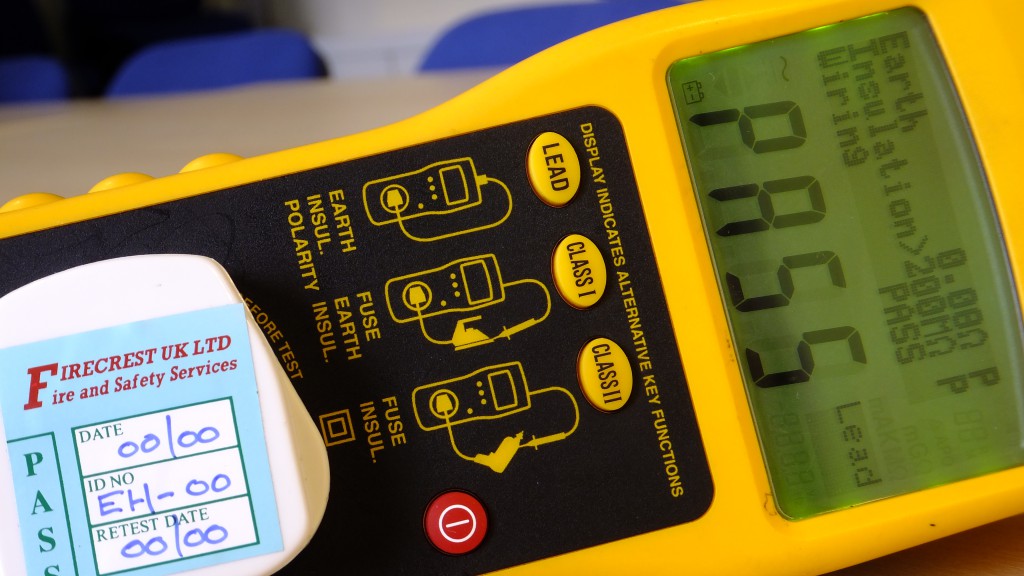
A competent technician understands the significance of their own testing equipment in obtaining precise results. They must be aware that their PAT tester needs to be regularly calibrated (typically every year, or annually) by accredited UKAS laboratories to assure the accuracy of its readings. They should have a valid certificate of calibration for their equipment. In addition, they must know how to operate the device correctly, carry out a daily user check (e.g., the lead test) and understand the results it provides, not just blindly record numbers.
7. Ability to Conduct Meaningful Visible Inspections in East Midlands
A minimum of 90 percent faults can be identified by a thorough visual examination. This is a step that an experienced technician will take very seriously. He will check carefully every plug and cable as well as connectors and casings to look for wear, damage or indications of heat excessive. They also know how to properly connect a connector with the right fuse rating. It's possible that a tester who has less experience will rush or even skip this step completely.
8. Judging and Decision-Making: Interpreting Results, and Applying Pass/Fail Criteria in East Midlands
The tester's electronic circuitry produces readings, but it is the technician that makes the judgment. The ability to interpret readings in the context of IET Code of Practice pass/fail limitations and the appliance is a mark of competence. As an example they should know when an slightly higher insulation resistance reading can be accepted or when an earth continuity reading appears to be acceptable but could indicate the presence of a problem with a certain type of appliance. A qualified professional's true value is the ability to make the right decisions.
9. Insurance and Liability Considerations in East Midlands
Even though it is not required by law for an experienced technician to have Public Liability Insurance (e.g. PS2-5 million) This would be ideal. This will protect the client in the event that the technician causes damage to property during the testing. The hiring of a skilled technician enhances the dutyholder's legal defence. It shows that all reasonable measures were employed to secure a suitable candidate.
10. Skills for documenting and communicating in East Midlands
A testing process that lacks precise and clear documentation is useless. A qualified technician must produce clear, legible reports as well as asset registers that clearly identify every appliance, keep track of all test results and clearly state the pass or fail result. They should also be able communicate effectively with the dutyholder, explaining any issues found as well as the risk associated with it, and the required actions (e.g. repair or replacement). This is crucial to the overall safety process. Take a look at the top portable appliance testing in East Midlands for more tips.
Top 10 Tips On The Reputation And Experience Of Fire Extinguisher Services in East Midlands
Technical compliance isn't the only factor to consider when it comes to fire safety. The reputation and experience of your selected fire extinguisher services company are equally crucial elements that distinguish good suppliers from outstanding partners. Although certifications such as BAFE SP101 show technical competence however they do not necessarily indicate a company's experience, customer service ethos, or proven track record on the job. Professionals with experience can spot subtle signs of wear, or incorrect application that less experienced eyes could miss. The reputation of a business is formed over many years through steady and reliable services. It is the collective opinion of the market about the reliability, responsiveness and overall value as well as credibility. For the Responsible Person, evaluating these softer factors is a crucial due diligence step that ensures that the service you choose to use does not just match the requirements on paper but can deliver a service that is robust and reliable. They can also tailor the service to your particular operational requirements and requirements, ultimately becoming a crucial component of your overall fire safety plan.
1. The crucial importance of longevity and Trading History in East Midlands
The duration of a business's operation is an important measure of its strength and stability. A business who has been trading successfully for a decade or more has probably gotten through cycles of economic change, adjusted to changing regulations, and refined its business practices. This longevity implies a sustainable company and an ability to retain clientele over the long haul. It's an indication of a business which has managed to resolve issues and keep a high level of service to customers. However, a brand new company, while not necessarily inherently unqualified, is an increased risk of being unknowledgeable. Investigate the history of a business. This information can be available on the company's website in the "About Us" section or verified with a search through Companies House.
2. Experience and expertise specific to the sector in East Midlands
Each building is unique. Fire risks and operating constraints in a large industrial building differ from those found in a school, an office building located in central London or a listed historical building. A reputable business has demonstrated experience in many different industries. When researching, look for case studies, client list or testimonials which refer to the kind of facility you're looking for. A service provider who has expertise in your industry is aware of your specific challenges for example, out-of-hours-working needs for a 24 hour data centre, the requirement for minimal disruption in a bustling retail setting, or the specific rules that govern healthcare facilities. This is an invaluable service that goes above and beyond the typical.
3. The power of customer reviews and online Reviews
In the digital world the reputation of a business is maintained through platforms like Google Reviews copyright, or directories specialized to industry. These reviews provide unbiased insights into the customer experience. Take a look beyond the star rating when analysing these reviews. It is important to read through the reviews and discover what made the customers happy or unhappy. It's very encouraging to hear praises for punctuality and prompt communication and helpful engineers. On the other hand, you should pay attention to complaints of poor communication, missed appointment or billing errors. It is crucial to observe the company's response to reviews that are negative. A professional and empathetic approach that concentrates on solutions shows a commitment to customer care.
4. Word of Mouth and references in East Midlands
Online reviews are useful but a personal recommendation from a trusted colleague is far more valuable. Get recommendations from facilities managers and business owners from your network. This is especially crucial if you are in the same industry. If they are willing, a reputable company would be glad to give you the contact information of customers who can share their experiences. Speaking directly to a reference allows you to ask questions specific to reliability or problem-solving as well as the long-term value of the relationship. This gives an additional level of assurance.
5. Calibre and Demeanour of Engineering Staff in East Midlands
The engineers in the frontline of a business will eventually decide the reputation of the company. When they visit their sites you get a direct window into their standards. Companies with a good reputation invest a lot of money not just in the technical training of their employees but also in their customer service. Their employees should display a professional appearance, be clearly identifiable by their uniforms, and be happy to explain their work. They should be able answer questions with knowledge and highlight possible issues, or offer suggestions. The quality of engineers throughout a company is an indication of its management and training culture.
6. Professional and Trade Bodies Membership in East Midlands
Although it's not a direct measure for reputation, belonging to organisations like British Fire Consortium or Fire Industry Association (FIA), indicates a company's commitment to stay on the cutting edge of their industry. These bodies offer technical updates as well as networking opportunities and ongoing professional development. Attending seminars or participating in working groups shows a firm's dedication and forward-thinking. It also increases their standing and reputation among the fire industry's professional community.
7. Answering Questions and Precontract Communications in East Midlands
The first encounters you have with a company are an excellent indicator of their future services. A trustworthy service provider should be friendly and professional when you first contact them. A reliable provider will offer clear, transparent and complete quote, without any pressure. Note how quickly you receive a reply from them. Do they provide you with the information you need, such as insurance certificates or certifications. It is likely that a company that is difficult to deal with prior to acquiring your business may be more difficult once under contract.
8. The clarity and scope of the Service Level Agreements in East Midlands
An experienced and confident firm will offer an unambiguous, complete Service Level Agreement (SLA). This document should clearly outline the services offered, the frequency of visits, the time it takes to respond for calls or queries along with the format and method of delivery for documents, and the process of addressing any issues. Uncertain or simple contracts are red flags. A detailed SLA shows a company’s experience dealing with expectations from clients. It also provides an enduring foundation for a professional relationship and safeguards both parties.
9. Account Management and Continuity in East Midlands
The low turnover of staff and having a designated person to contact, or an account manager, are indicators of a reputable business. This builds trust, offers the security of having someone who understands your business and your history is in charge of your account. Inefficient communication, missing appointments and absence of understanding between institutions are often the result of an excessive turnover rate for office staff. Inquire about the provider's staff retention and management structure.
10. Handling of Problems and Complaints Resolution in East Midlands
Even the best of companies might encounter issues. It's not the frequency of issues that determines a company's reputation and how they handle these issues. An experienced company will have clearly defined, formal and fair complaint procedure. The company will be transparent about their plans for resolving issues and take responsibility for them. A good way to gauge this is how they handle customer service issues. A defensive or aggressive one is a major warning sign. Have a look at the most popular East Midlands fire extinguisher checks for website recommendations.
